
Most conversations about AI sound the same. Which model scored highest on the benchmark. Which one writes better code. Which one is "the smartest." The whole debate has turned into a leaderboard.
I think we are measuring the wrong thing.
We are not just building tools anymore. We are building working relationships.
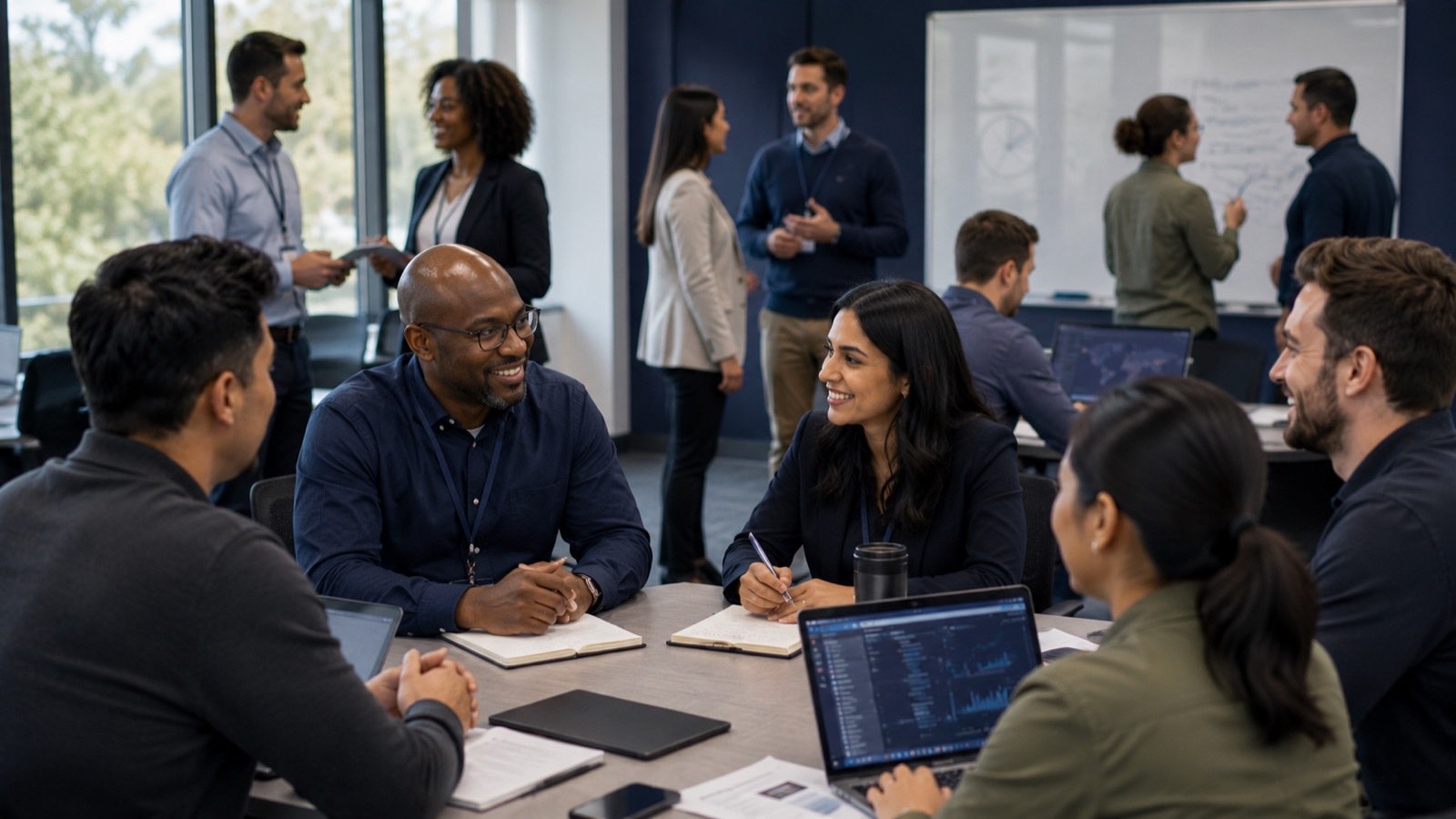
I have spent the last seven years studying artificial intelligence. I have watched it go from a simple assistant that could answer a question into a collaborator that can sit with you through a hard problem and actually move it forward. That shift never showed up on a benchmark. It showed up in the day to day work.
Lately I have been running several proof of concept projects at once, across engineering, cybersecurity, business strategy, automation, and AI governance. Working that closely with different models for weeks at a time, one thing became impossible to ignore. Each model brings its own conversational persona to the work.
Some are patient teachers. They slow down, explain the why, and never make you feel behind. Some are relentlessly analytical and want the data before they will commit to anything. Some challenge every assumption you make, which is frustrating right up until it saves you from a bad decision. A few have a dry, almost sarcastic edge that pushes you to defend your thinking instead of coasting on it.

At first I treated those differences as a novelty. A fun quirk. Something to mention at the end of a demo.
I do not see it that way anymore.
The persona is not decoration. It changes the quality of the work. A model that challenges me produces different decisions than one that agrees with me. A model that teaches produces a different team than one that just hands over answers. When an AI agent becomes part of how you actually operate, how it communicates is not a side feature. It is the feature.
This matters for where all of this is heading. As AI agents move into daily work, we are going to stop grading them only by model size and benchmark scores. We are going to grade them by how well they communicate, how they collaborate, and whether they help us make better decisions than we would have made alone.
That last part is the one I care about most. I do not want an AI that makes me faster at being wrong. I want one that makes the decision better and leaves a trail I can defend later.
This is also why I build the way I do. Human-led. Agent-assisted. Evidence-proven. The goal was never to hand the work to a machine and walk away. The goal is a working relationship where the person stays responsible, the AI carries the load it is good at, and every step can be checked.
We spent years asking whether AI could do the work. That question is mostly answered. The better question now is who we want in the room with us while we do it.
Because that is what we are really building. Not just smarter tools. Working relationships. And the ones that last will be the ones that make us better, not just faster.